
Where Feng Shui Meets Japanese Tradition: Tea Ceremony and Noh Dance
- 14 hours ago
- 2 min read
As a Feng Shui consultant, I believe wisdom comes not only from books, but from real life experiences.
Recently, I had two special experiences with Japanese culture—Tea Ceremony in Queens, New York, and Noh theater in my hometown of Matsuyama.
They are different traditions, but both teach the same lesson: harmony comes from presence, balance, and respect for energy.
Tea Ceremony in New York
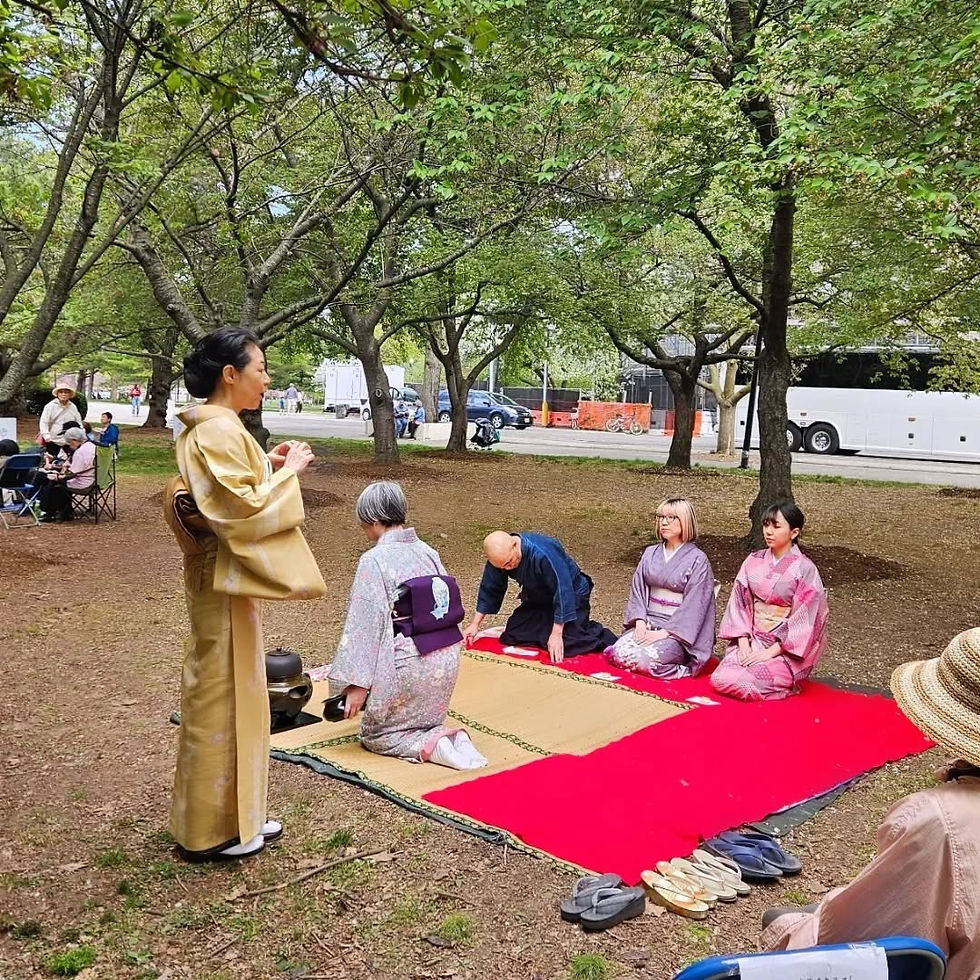
Before returning to Japan, I attended a tea ceremony in Corona Park, Queens while wearing kimono.
Even in a busy city, the tea ceremony created a quiet and peaceful moment, surrounded by beautiful blooming cherry blossoms.
Every movement was calm. Every gesture had meaning. Every detail was thoughtful.
This is also Feng Shui.
A peaceful space is created with care, simplicity, hospitality and intention. Even one small corner of a home can feel special when treated with attention.


Noh Experience in Matsuyama
During my visit home to Matsuyama, I was given a rare opportunity thanks to my university senior, Sugi-san. Noh is one of the oldest performing arts in the world. It is recognized by UNESCO and has been passed down for over 600 years.
It was an unforgettable experience. I received a Noh lesson from Mr. Keiichi Kaneko, a Kita-school Noh performer. I was also allowed to wear a real Noh mask and traditional costume. (Please check the short video!)
Noh and Feng Shui
What touched me most were the words of Living National Treasure Genjiro Okura.
In Noh music:
Flute and chant represent Wind
Drums represent Water
As someone who studies Feng Shui, this felt very meaningful.
Noh is not only performance. It is harmony of sound and silence, movement and stillness, nature and spirit.
In many ways, Noh is Feng Shui in motion.
What These Traditions Teach Us
Both Tea Ceremony and Noh remind us to:
Slow down
Respect
Appreciate
Simplicity
Create beauty with intention
Value peaceful energy
This is the heart of Feng Shui.
Gratitude
Thank you to Sugi-san for arranging this special opportunity, and to Kaneko Sensei for his kindness and guidance.
Japanese culture continues to share timeless wisdom, both in Japan and around the world.


Comments